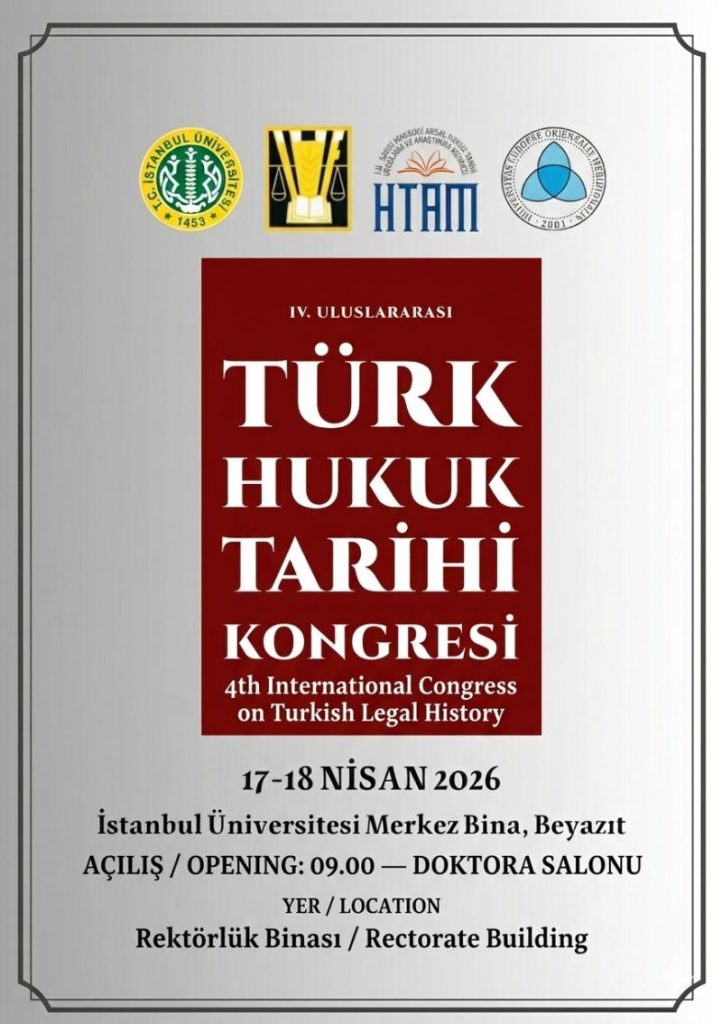
Dinler, V., (2026), “Osmanlı Devletinde Ceza Adalet Sisteminin Sekülerleşmesi”, IV. Uluslararası Türk Hukuk Tarihi Kongresi, İstanbul, 17–18 Nisan 2026.
— ÖZET—
Bu bildiri, Osmanlı Devleti’nde 19. yüzyılın ortalarından Cumhuriyet’in erken dönemine uzanan yaklaşık yüz yıllık süreçte, hukukun sekülerleşmesi ile ceza adalet sisteminin kurumsallaşması arasındaki karşılıklı ilişkiyi incelemeyi amaçlamaktadır. Çalışmanın başlangıç noktası, Osmanlı’nın Batı ile ekonomik ve siyasal entegrasyonunu hızlandıran Baltalimanı Ticaret Antlaşması olup, bu antlaşma sonrasında hız kazanan reform sürecinin hukuk alanındaki yansımaları analiz edilmektedir.
Osmanlı’da şer’i temelli kadılık sistemi yanında seküler mahkemelerin nasıl ortaya çıktığı, savcılık kurumunun hangi ihtiyaçlar doğrultusunda geliştiği, ceza kanunnamelerinin kabulü ve hukuk resepsiyonu sürecinin yargılama pratiğini nasıl dönüştürdüğü, kolluk teşkilatının (polis ve jandarma) ceza adalet sisteminin işleyişindeki rolünün nasıl kurumsallaştığı, hapishane sisteminin modern ceza anlayışıyla birlikte nasıl şekillendiği, bilirkişilik ve adli tıp gibi teknik bilgiye dayalı kurumların hangi evrelerden geçerek yargı sürecine dahil edildiği ve avukatlık ile baroların yargılamanın adil ve profesyonel bir zemine oturmasına nasıl katkı sağladığı sorularına cevap aranacaktır.
Çalışmanın temel argümanı, Osmanlı’dan Cumhuriyet’e uzanan bu dönüşümün yalnızca normatif bir “kanunlaştırma” süreci olmadığı; aksine mahkemeler, savcılık, kolluk, infaz kurumları, bilirkişilik ve savunma mekanizmalarının birbirini tetikleyen ve tamamlayan biçimde eş zamanlı olarak geliştiği bütüncül bir kurumsallaşma süreci olduğudur. Bu bağlamda ceza adalet sistemi, tekil reformların toplamı olarak değil, karşılıklı bağımlılık içinde şekillenen bir “kurumsal ekosistem” olarak ele alınmalıdır.
Sonuç olarak bu bildiri, Osmanlı’da hukukun sekülerleşmesinin yalnızca şer’i hukuktan kopuş anlamına gelmediğini; aynı zamanda modern devletin ceza adaletini üretme, uygulama ve denetleme kapasitesinin inşasıyla doğrudan bağlantılı olduğunu ortaya koymayı hedeflemektedir. Bu yönüyle çalışma, Türkiye’de modern ceza adalet sisteminin tarihsel kökenlerini ve kurumsal mantığını anlamaya katkı sunmayı amaçlamaktadır.
— ANAHTAR KELİMELER —
Hukukun Sekülerleşmesi, Ceza Adalet Sistemi, Osmanlı Hukukunun Modernleşmesi, Ceza Adalet Sisteminde Kurumsallaşma, Hukukta Resepsiyon Süreci
—BİLİMSEL ETKİNLİK—
- IV. Uluslararası Türk Hukuk Tarihi Kongresi
- İstanbul Üniversitesi Hukuk Fakültesi Sadri Maksudi Arsal Hukuk Tarihi Uygulama ve Araştırma Merkezi
- İstanbul
- 17-18 Nisan 2026
The Institutionalization of the Criminal Justice System in the Process of Legal Secularization in the Ottoman Empire
Dinler, V. (2026), “The Institutionalization of the Criminal Justice System in the Process of Legal Secularization in the Ottoman Empire” IV. International Congress on Turkish Legal History, Istanbul, 17–18 April 2026.
— ABSTRACT —
This paper aims to examine the reciprocal relationship between the secularization of law and the institutionalization of the criminal justice system in the Ottoman Empire over approximately a century, spanning from the mid-19th century to the early Republican period. The starting point of the study is the Baltalimanı Trade Agreement, which accelerated the Empire’s economic and political integration with the West; the legal implications of the reform process that gained momentum after this agreement are analyzed.
The study seeks to answer how secular courts emerged alongside the sharia-based kadi system in the Ottoman Empire; what needs led to the development of the public prosecution institution; how the adoption of penal codes and the process of legal reception transformed judicial practice; how law enforcement institutions (police and gendarmerie) became institutionalized within the functioning of the criminal justice system; how the prison system was shaped in line with the modern understanding of punishment; through which stages expert witnessing and forensic medicine were incorporated into judicial processes; and how the development of the legal profession and bar associations contributed to establishing a fair and professional judicial framework.
The main argument of the study is that this transformation, extending from the Ottoman Empire to the Republic, was not merely a normative process of codification. Rather, it constituted a comprehensive institutionalization process in which courts, prosecution, law enforcement, penal institutions, expert systems, and defense mechanisms developed simultaneously in a mutually reinforcing manner. In this sense, the criminal justice system should be understood not as the sum of isolated reforms, but as an institutional ecosystem shaped by interdependence.
In conclusion, this paper argues that the secularization of law in the Ottoman Empire did not simply signify a departure from sharia-based law; it was also directly linked to the construction of the modern state’s capacity to produce, implement, and supervise criminal justice. In this respect, the study aims to contribute to a better understanding of the historical foundations and institutional logic of the modern criminal justice system in Turkey.
— KEYWORDS —
Secularization of Law, Criminal Justice System, Modernization of Ottoman Law, Institutionalization in the Criminal Justice System, Legal Reception Process
—SCIENTIFIC EVENT—
- IV. International Turkish Legal History Congress
- Istanbul University Faculty of Law, Sadri Maksudi Arsal Center for Legal History Practice and Research
- Istanbul
- 17–18 April 2026
— KAYNAKÇA / BIBLIOGRAPHY —
İncele / Look
— ATIFLAR / CITATIONS —
İncele / Look
Henüz atıf yapılmadı